
Tempo de leitura: 11 minutos
Introduction: The Airlock Strategy
In 1979, the border between the British colony of Hong Kong and the Chinese county of Bao’an was one of the starkest economic fault lines on earth. On the south side lay a neon-lit hyper-capitalist enclave, a hub of global finance and trade. On the north side lay a stagnant hinterland where per capita GDP was less than $200, and where residents frequently risked death by swimming across the Shenzhen Bay to escape poverty.
The establishment of Special Economic Zones (SEZs) in 1980 was the Chinese Communist Party’s (CPC) attempt to bridge this chasm without falling into it. It was a strategy of “controlled contagion.” The leadership in Beijing, desperate for foreign technology and hard currency but terrified of ideological contamination, devised a geo-spatial solution: they would cordon off specific areas of the coast to function as “airlocks.” Inside these zones, the laws of Marx would be suspended, and the laws of the market would prevail. If the experiment failed, the blast doors could be sealed, limiting the damage to a few square miles. If it succeeded, the model could be replicated.
The rise of Shenzhen, Zhuhai, Shantou, and Xiamen represents the pivotal moment where China engaged with global capital. However, this was not a surrender to neoliberalism. It was a calculated state-building project where the CPC leveraged the “Bamboo Network” of the Chinese diaspora to import the tools of modernity, creating a hybrid system of “Red Capitalism” that would eventually engulf the nation.
The Logic of Location: Ethnography as Economics
The selection of the original four SEZs was neither random nor based solely on logistical convenience. It was deeply rooted in the ethnography of the Chinese diaspora. The central leadership recognized that Western multinationals—General Motors, Siemens, or Toshiba—were unlikely to invest immediately in a communist state with a track record of seizing assets. The only capital willing to take the risk was “kinship capital.”
Consequently, the zones were positioned as magnets for specific communities:
- Shenzhen: Located adjacent to Hong Kong, targeting the Cantonese diaspora and the British colony’s manufacturing base.
- Zhuhai: Located adjacent to Macau, targeting capital from that Portuguese colony and overseas Chinese in Southeast Asia.
- Shantou: The ancestral home of the Chaoshan (Teochew) people, a dominant commercial group in Thailand, Singapore, and Hong Kong.
- Xiamen: Located directly across the strait from Taiwan, targeting the Hokkien-speaking Taiwanese business community.
This “United Front” economics weaponized cultural affinity. Investors were courted not just with tax breaks, but with appeals to patriotism and ancestral duty. This strategy allowed China to bypass the Cold War containment architecture, using the diaspora as a bridge to the global market.
The Guangdong Initiative: Xi Zhongxun and the “Special Policy”
Contrary to the popular myth that Deng Xiaoping simply drew a circle in the sand, the impetus for the SEZs came from local Guangdong officials, specifically Xi Zhongxun (the father of Xi Jinping) and Yang Shangkun. In late 1978 and early 1979, they reported to Beijing that the province was hemorrhaging its youth, who were fleeing to Hong Kong. They argued that the only way to stop the exodus was to reduce the economic disparity.
Xi requested the power to adopt “special policies and flexible measures.” Deng Xiaoping approved, famously telling them to “blaze a trail of blood” if necessary, but noting that the central government had no money to give them. “You have to figure out a way yourselves,” Deng said. “Kill a bloody path.”
The term “Special Economic Zone” was formally adopted in August 1980. The designation granted these localities extraordinary autonomy: they could approve foreign investment projects without Beijing’s permission (up to a certain limit), retain a higher percentage of foreign exchange earnings, and, crucially, experiment with labor and land laws that were heretical in the rest of the country.
Shenzhen: The Instant Metropolis and “Shekou Speed”
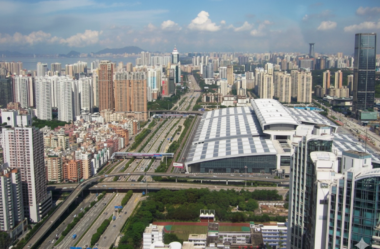
Shenzhen is the archetype of the SEZ model. In 1979, it was a collection of rural towns and fishing villages with a population of roughly 300,000. By the end of the 1980s, it was a manufacturing powerhouse.
The pilot within the pilot was the Shekou Industrial Zone, established in early 1979 by Yuan Geng of the China Merchants Group. Shekou was the testbed for the most radical reforms. Here, the “iron rice bowl” (guaranteed lifetime employment) was smashed. Wages were linked to performance. Housing was commodified.
Yuan Geng erected a billboard in Shekou with the slogan: “Time is Money, Efficiency is Life.” In a country where “time” belonged to the Party and “money” was bourgeois filth, this was revolutionary. Conservative ideologues attacked the slogan, but Deng Xiaoping defended it.
The physical construction of Shenzhen was spearheaded by the Engineering Corps of the People’s Liberation Army (PLA). In a stroke of irony, the shock troops of the revolution became the shock troops of capitalism. They built the “Guomao” (International Trade Centre) building at a pace of “one story every three days,” coining the phrase “Shenzhen Speed.”
The State-Market Hybrid: How the Zones Worked
The economic logic of the SEZs was based on the “East Asian Development Model”—export-oriented industrialization—but adapted for a socialist command economy.
- Three-Plus-One Trading Mix: This involved processing supplied materials, assembling supplied parts, processing according to supplied samples, and compensation trade. Hong Kong manufacturers moved their factories across the border to exploit cheap Chinese labor (land and labor costs were 1/10th of Hong Kong’s), while keeping management, marketing, and finance in the colony.
- Land Reform: In 1987, Shenzhen held the first land auction in the PRC. This effectively separated land ownership(state) from land use rights (private), creating a real estate market that allowed local governments to fund infrastructure through land sales—a fiscal model that still dominates China today.
- Tax Incentives: Foreign enterprises enjoyed a corporate tax rate of 15% (compared to 30-50% elsewhere) and tax holidays for the first profitable years.
This created a “front shop, back factory” model. Shenzhen became the factory floor for Hong Kong, allowing China to integrate into global supply chains at the lowest rung without having to privatize its massive state-owned enterprises (SOEs) immediately.
The Crisis of 1982-1984: Smuggling and Spiritual Pollution
The SEZs were not an immediate, unqualified success. In the early years, they were chaotic, lawless frontiers. Because the zones had duty-free import privileges, they became hubs for massive arbitrage. State-owned companies set up shell operations in Shenzhen to import foreign cars, TVs, and cigarettes duty-free, then resold them to the interior of China at huge markups.
This culminated in the “Hainan Car Scandal” (though Hainan was not yet a formal SEZ, it operated under similar rules), where officials imported 90,000 limousines to resell.
Conservative elders in Beijing, led by Chen Yun, viewed the SEZs with deep suspicion. They saw them as “concessions” reminiscent of the unequal treaties of the 19th century—zones of colonial exploitation and moral decay. They attacked the zones for bringing in “spiritual pollution” (pornography, pop music, and western ideology) alongside technology. Chen Yun famously championed the “Birdcage Economy” theory: the market is the bird, the plan is the cage. If the cage is too small, the bird dies; if there is no cage, the bird flies away. The SEZs, to him, looked like a dismantled cage.
By 1982, there was intense pressure to shut the zones down or severely curtail them. They were accused of costing the state more in lost tariff revenue than they generated in investment.
Deng’s Southern Tour (1984) and the Expansion
Facing this backlash, Deng Xiaoping undertook his first “Southern Tour” in early 1984 (a precursor to his more famous 1992 tour). He inspected Shenzhen and Zhuhai, witnessing the construction cranes and the bustling factories.
Upon returning to Beijing, Deng outflanked the conservatives. He wrote an inscription: “The development and experience of Shenzhen prove that our policy of establishing Special Economic Zones is correct.” With Deng’s personal seal of approval, the debate was effectively silenced.
Deng argued that the problem was not that the zones were too open, but that they were not open enough. In May 1984, the government announced the opening of 14 Coastal Cities (including Shanghai, Tianjin, Dalian, and Guangzhou) to foreign investment. This moved the SEZ model from a peripheral experiment to a national strategy. The “airlock” was opened, and the coastal developmental strategy became the engine of the Chinese economy.
The Limits of the Model: Inequality and Labor
While the SEZs succeeded in generating growth, they birthed a brutal form of labor relations. The “migrant worker” (dagong mei/zai) became the fuel of the zones. These workers, mostly young women from rural provinces, worked 12-to-16-hour days in sweatshop conditions, lacking the legal protections and social benefits of urban residents due to the hukousystem.
The zones also exacerbated regional inequality. By concentrating preferential policies on the coast, the state deliberately engineered a wealth gap between the eastern seaboard and the interior. Deng justified this with the slogan “Let some people and some regions get rich first,” predicting that wealth would eventually trickle down. The SEZs created a “dual structure” economy that China struggles to rebalance to this day.
Conclusion: The Trojan Horse of Modernization
The Special Economic Zones were the Trojan Horse of Chinese reform. They were sold to the party elite as containment zones to isolate capitalism, but in practice, they served as transmission belts that disseminated market logic throughout the country.
They fundamentally altered the psychology of the nation. By proving that “socialist” land could be leased, that labor could be a commodity, and that foreign capital was a partner rather than a predator, the SEZs de-ideologized the economy. Shenzhen began as a laboratory, but it ended as the blueprint. The logic of the SEZ—competition, openness, and integration with the world—did not stay behind the wire fences; it conquered the Middle Kingdom.
Historiographical Note
The study of SEZs has moved from economic triumphalism to institutional critique.
1. The “Flying Geese” Paradigm: Early scholarship (Akamatsu, later adapted by Western economists) viewed SEZs through the lens of the “product life cycle,” where industrial production moves from advanced nations (Japan, Asian Tigers) to lower-cost nations (China). This view treats SEZs as passive recipients of global capital.
2. Institutional Arbitrage: Scholars like Yasheng Huang argue that the success of SEZs was not due to foreign capital per se, but because they allowed domestic private firms to bypass the stifling regulations of the state socialist system. By registering as “foreign” or “joint venture” entities, Chinese entrepreneurs used SEZs to escape the discrimination they faced in the interior.
3. Local State Corporatism: Jean C. Oi and George Lin emphasize the role of local governments. They argue that SEZs succeeded because they aligned the fiscal incentives of local officials with economic growth. The SEZ was less a free market and more a zone of “state entrepreneurialism.”
4. The Hong Kong Factor: Ezra Vogel’s work is crucial in centering Hong Kong. He argues that without the specific cultural, linguistic, and financial infrastructure of Hong Kong, the Shenzhen experiment would likely have failed. The SEZ was essentially the economic annexation of the Pearl River Delta by Hong Kong capital.
Further Reading
- Vogel, Ezra F. One Step Ahead in China: Guangdong Under Reform (Harvard University Press, 1989).
- The classic text on the early reform period in the south. Vogel provides an exhaustive account of the political maneuvering by Guangdong officials to secure the autonomy needed for the SEZs.
- Crane, George T. The Political Economy of China’s Special Economic Zones (M.E. Sharpe, 1990).
- Analyzes the intense political struggles between the “reformers” and “conservatives” in Beijing regarding the nature and existence of the zones.
- Ngai, Pun. Made in China: Women Factory Workers in a Global Workplace (Duke University Press, 2005).
- A seminal anthropological work that shifts the focus from policymakers to the shop floor. It details the lived experience of the “dagong mei” (working girls) in Shenzhen’s electronics factories.
- Naughton, Barry. The Chinese Economy: Transitions and Growth (MIT Press, 2007).
- Provides the macroeconomic context, explaining how the SEZs fit into the broader dual-track liberalization strategy.
- Cartier, Carolyn. Globalizing South China (Blackwell, 2001).
- Examines the spatial geography of the zones, analyzing how the creation of the SEZs reconfigured the landscape and cultural identity of the region.
Fonte: Explaining History Podcast | Foto: Reprodução



Os comentários foram encerrados, mas trackbacks e pingbacks estão abertos.