
Tempo de leitura: 33 minutos
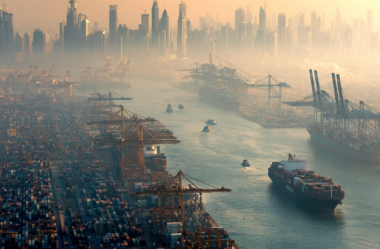
In an era increasingly characterized by protectionist tariffs, trade conflicts, and the resurgence of nation-state borders, a contrasting yet equally powerful development is taking place in the background. Shielded by fences and complex customs codes, so-called free ports and free trade zones are growing worldwide into the true power centers of the global economy. These areas are far more than mere parking lots for containers or transshipment points for goods; they are special legal and fiscal zones that operate according to their own rules and exert an enormous economic pull.
While classic multilateral trade agreements are losing their luster, places like Dubai’s Jebel Ali Free Zone or the city-state of Singapore are flourishing by offering companies an irresistible deal: maximum flexibility with minimal bureaucracy and tax burden. But the success of these zones raises pressing questions. What is the “anatomy” of such a free port, which provides companies with liquidity advantages in the millions without a single product being sold? Why do these tax-exempt zones paradoxically often generate higher government revenues than regular economic zones? And above all: Who ultimately foots the bill for the relentless competition for business locations raging between European ports like Hamburg, Rotterdam, and Antwerp?
The following report delves deep into the mechanisms of these special economic zones. It illuminates the transformation from simple warehouses to highly technological production facilities, analyzes the complex winner-loser structures between global shipping companies and local dockworkers, and reveals how unequal government subsidies are redrawing the map of European trade. Learn why free ports are now considered perhaps the most important—and controversial—economic catalyst of our time.
The renaissance of an old instrument: When border regions become engines of growth
Global trade dynamics are undergoing a paradoxical development: While multilateral trade agreements are losing political clout and protectionist tendencies are on the rise, free ports and free trade zones are expanding worldwide at a remarkable pace. These demarcated customs territories, governed by special tax and customs regulations, have transformed from historical port relics into cutting-edge economic clusters. The United Arab Emirates now maintains 46 such zones, with Dubai alone boasting 30, and the number is growing. The Jebel Ali Free Zone in Dubai alone is home to over 11,000 companies from more than 100 countries and generates $190 billion in trade annually. This boom raises fundamental questions: What structural mechanisms make these zones so attractive? Who actually benefits from these special economic areas? And what price do companies pay for these concentrated growth zones?
Anatomy of a free port: More than just tax avoidance
The basic principle of a free port appears simple at first glance: a spatially defined area within a port or airport where goods can be stored, processed, or further manufactured without the immediate imposition of customs duties and import VAT. Only when the goods leave the free port and enter the regular economic cycle are the corresponding duties levied. However, this deferral of tax liability is merely the most superficial aspect of a complex economic instrument.
The structural advantages extend far beyond mere liquidity optimization. In the free port of Trieste, for example, goods can be stored indefinitely without ever incurring customs duties or VAT, as long as they are not transferred to the Italian or European market. Companies also gain access to a customs credit that defers payment of duties for up to 180 days. This mechanism generates significant leverage: A company importing goods worth ten million euros, with an average customs duty of five percent and a VAT rate of 20 percent, initially saves 2.5 million euros in liquidity. These funds can be used for operational business or investments before the actual tax liability becomes due.
Even more significant is the possibility of refining and further processing within the free zone. Raw materials or semi-finished goods can be imported, processed and refined in the free port, and then sold as products with EU origin or directly re-exported. This opens up strategic options for manufacturing companies along the entire value chain. The automotive industry systematically utilizes these structures: components from Asia are stored in European free ports, pre-assembled or adapted as needed, and only cleared through customs once the final sales markets have been determined. This flexibility not only reduces capital tied up but also minimizes warehousing costs and currency risks.
The economic multipliers: How a port transforms a region
The macroeconomic effects of free ports unfold on multiple levels and often exceed the initial expectations of policymakers. The Port of Hamburg, which had extensive free port areas until 2012, illustrates these mechanisms. In 2019, 130,000 jobs in the Hamburg metropolitan region were directly dependent on the port. However, this figure only captures activities directly related to the port. The actual employment impact is significantly higher: Statistically, every directly port-dependent job secures approximately four additional jobs in the transport chain and 37 jobs in port-dependent industries. This multiplier effect results from the complex interrelationships between upstream suppliers and the induced effects on consumption.
Value creation follows a similar pattern. In 2019, the Port of Hamburg generated €12.4 billion in direct gross value added within the metropolitan region. When the nationwide effects resulting from intermediate goods purchases and employment in the port-dependent transport chain and industry are included, this figure increases considerably. The fiscal effects are also substantial: In the Hamburg metropolitan region alone, the port-dependent economy triggered €1.53 billion in tax revenue, while nationwide the tax effect totaled €2.57 billion. These figures illustrate a paradox: Although free ports are based on tax breaks, they generate significant tax revenue through the establishment of businesses and the creation of jobs – revenue that would not have been generated without these special regulations.
International comparisons reveal the wide range of possible development paths. Singapore, whose entire port area effectively functions as a free trade zone, demonstrates the transformative power of these instruments. The city-state possesses virtually no natural resources and only limited agricultural land. Nevertheless, Singapore has become the world’s third-largest port, handling over 37 million TEU of container cargo in 2022. Its trade-to-GDP ratio is approximately 400 percent, a figure unparalleled worldwide. Over 10,000 European companies use Singapore as a logistics hub for their Asian operations. The economic pull is so strong that all 25 leading global freight forwarders have a presence in the city-state. Economic growth of 4.4 percent in 2024 is largely attributable to its role as a trading hub.
Dubai follows a different, but equally successful model. The Jebel Ali Free Zone was established in 1985 as the first free trade zone in the United Arab Emirates. Today, it secures 130,000 jobs and contributes significantly to Dubai’s gross domestic product. The recipe for success lies in the combination of 100% foreign ownership, a 50-year corporate tax exemption, and modern infrastructure. While European free ports primarily focus on logistics and transshipment, Dubai has developed into a diversified economic cluster that integrates logistics, e-commerce, petrochemicals, and 14 other industries.
Value chains reimagined: From storage to production
The role of freeports in global value chains has fundamentally changed. Originally conceived as temporary storage facilities where goods awaited customs clearance or onward shipment, modern free zones have evolved into fully integrated production and distribution centers. This evolution reflects the increasing fragmentation of international production processes. When a German automotive company manufactures engines in Germany, imports transmissions from Japan, sources electronic components from China, and carries out final assembly in several European plants, it needs logistical hubs that efficiently coordinate these complex flows of goods.
Freeports fulfill several functions simultaneously. They serve as buffer zones for just-in-time deliveries, as distribution and order picking centers, and as locations for value creation through processing, pre-assembly, or quality control. The ability to store goods duty-free until their final destination is determined significantly reduces the risk of misdirected goods flows. At the same time, companies can respond to fluctuations in demand without having to make substantial customs payments upfront, which would not be refunded upon re-export.
The cluster effects that develop in successful free zones amplify these advantages. When specialized logistics providers, packaging companies, quality inspectors, customs service providers, and manufacturing companies locate in close proximity, network effects emerge that reduce transaction costs and accelerate innovation. An empirical study shows that relocating a business to an area with approximately 1,000 employees in the same economic sector leads to an increase in total factor productivity of five to six percent. These productivity gains result from knowledge exchange, specialized labor markets, and the local availability of complementary services.
The beneficiaries: A complex web of interests
The question of who benefits from free ports leads to a complex network of diverse actors with sometimes diverging, sometimes converging interests. At the first level are the companies operating directly within the free zone. Shipping companies benefit from efficient transshipment hubs with minimized turnaround times and reduced bureaucratic hurdles. Twenty of the world’s 25 leading shipping companies have branches in the Port of Hamburg. For these companies, the free port infrastructure means not only cost savings but also strategic flexibility in route planning and cargo location.
Logistics companies and freight forwarders form the second key beneficiary group. They organize complex flows of goods, coordinate multimodal transport, and handle customs procedures. The ability to store goods duty-free indefinitely significantly expands their service portfolio. They can offer their customers customized solutions ranging from pure transport handling to warehousing, order picking, and even light pre-assembly work. This expansion of value creation secures jobs and justifies higher margins.
The manufacturing industry uses free zones for different reasons. For companies pursuing global sourcing strategies, free ports offer the opportunity to consolidate and process raw materials and components from various regions of the world and then distribute them in a targeted manner to their final sales markets. The chemical and pharmaceutical industries particularly value the possibility of long-term storage without customs duties, as their products are often subject to complex regulatory reviews before they can be marketed. Automotive manufacturers and their suppliers use free ports as strategic component reserves to avoid production interruptions without straining liquidity through premature customs clearance.
International corporations are increasingly recognizing the strategic advantages of free trade zones. The possibility of 100% foreign ownership, as offered by Dubai and other Gulf states, removes a key obstacle to direct investment. Combined with long-term tax exemptions of up to 50 years, this creates an investment climate that conventional locations can hardly match. These conditions have made Dubai the preferred regional headquarters for multinational companies, which use it to serve the entire Middle East and North Africa.
At the state level, the benefits manifest themselves in tax revenues, employment effects, and economic value creation. Although the state forgoes direct customs revenue from goods in the free port, it generates indirect tax revenue through the establishment of businesses, job creation, and induced consumption. The aforementioned €2.57 billion in tax revenue generated nationwide by the Port of Hamburg illustrates these mechanisms. Furthermore, a functioning port ensures the international competitiveness of the entire export-oriented economy. Germany conducts approximately 75 percent of its foreign trade by value via seaports. The availability of efficient port infrastructure is therefore systemically important for this export nation.
Ultimately, consumers also benefit, albeit indirectly and often invisibly. The cost efficiency generated by free ports along the supply chain translates into lower final prices. At the same time, facilitated imports expand the range of goods available and increase competition among suppliers, which tends to lead to better quality and lower prices.
Your container high-bay warehouse and container terminal experts
Container terminal systems for road, rail, and sea in the dual-use logistics concept of heavy-duty logistics – Creative image: Xpert.Digital
In a world characterized by geopolitical upheavals, fragile supply chains, and a new awareness of the vulnerability of critical infrastructure, the concept of national security is undergoing a fundamental reassessment. A state’s ability to ensure its economic prosperity, the supply of its population, and its military capability increasingly depends on the resilience of its logistics networks. In this context, the term “dual-use” is evolving from a niche category of export control to a overarching strategic doctrine. This shift is not merely a technical adaptation, but a necessary response to the “turning point” that requires the profound integration of civilian and military capabilities.
Segen and a curse at the same time: The two faces of global free trade zones
The economic advantages of free ports have a downside. The intense debate surrounding tax avoidance, unfair competitive distortions, and social impacts reveals fundamental tensions within the global economic system. Free ports and free trade zones create areas of reduced regulatory density, which are not only attractive to legitimate business models but also offer opportunities for aggressive tax planning. Hong Kong exemplifies this ambivalence: its status as a free port with unrestricted capital flows makes the Special Administrative Region one of Asia’s most important financial centers. At the same time, the low tax rates and lax controls allow Chinese companies to channel profits through Hong Kong subsidiaries, thus minimizing their tax burden.
The reduced controls in free ports also pose risks for smuggling and illegal activities. Goods that are not inspected immediately upon import can more easily be used for illicit purposes or forwarded. Arms smuggling, money laundering, and the circumvention of embargoes are recurring problems. Balancing trade facilitation with effective control remains a constant challenge for customs authorities.
The social dimension deserves special attention. The global competition for business locations, fueled by free ports, creates considerable pressure on wages and working conditions. This mechanism is particularly evident in the Port of Hamburg following the acquisition of a stake in Hamburg Hafen und Logistik AG by the world’s largest shipping company, MSC. While the contracts stipulate a five-year lock-up period during which MSC may neither terminate collective bargaining agreements nor withdraw from the employers’ association, dockworkers and unions fear that this period is merely a reprieve. The logic is simple: if shipping companies operate globally and recruit crews from low-wage countries, where they work for a fraction of the cost of German dockworkers, there is constant pressure to also reduce labor costs on land.
Increasing automation is exacerbating this dynamic. New, fully automated container terminals handle twice the throughput with only ten percent of the previous workforce. Investments in such facilities require capital, often provided by large shipping companies, which then wield considerable influence over working conditions. Employees fear not only job losses but also a deterioration of conditions for those who remain. Flexible work locations, increased workloads, and the growing use of temporary workers characterize the anxieties about the future among port workers.
The competitive dimension reveals a further dilemma. Companies within a free port enjoy structural advantages over those outside. This asymmetry can lead to distortions if firms locate in a free zone primarily because of the tax breaks, even if this makes no sense from a business or economic perspective. The danger is that such zones will become mere tax havens, formally hosting economic activity but in reality serving as transit points for financial flows without generating any significant added value.
The European context: When nation states compete for port favor
The competitive dynamics between European ports illustrate the limitations and contradictions of nationally fragmented port strategies within an integrated single market. Rotterdam and Antwerp-Bruges benefit from massive Dutch and Belgian state investments, which treat these ports as national strategic assets. In the Port of Rotterdam, for example, quay walls are classified as part of the national flood protection system and are therefore fully state-funded. German terminal operators, on the other hand, have to pay high rents and leases for the use of comparable infrastructure. These differing financing philosophies create significant distortions of competition.
Container throughput figures reflect these structural differences. Rotterdam achieved a throughput of 13.4 million TEU in 2020, Antwerp-Bruges 12.5 million TEU, while Hamburg reached 7.7 million TEU. The market share losses of German ports are not primarily a reflection of inefficiency on the part of port operators, but rather a result of differing governmental frameworks. While the Netherlands and Belgium view their ports as core infrastructure of their national economic policies and finance them accordingly, in Germany the responsibility lies with the individual states, with only limited federal compensation.
This asymmetry has far-reaching consequences. If shipping companies increasingly handle their cargo via Rotterdam or Antwerp, even if the final destination is in Germany, the added value of port handling remains abroad. Germany risks becoming a transit country for its own goods, while indirectly subsidizing the competitiveness of foreign ports by providing expensive hinterland infrastructure. Based on my extensive research, I am now preparing a structured, in-depth report in clear German on the structural and economic advantages of free ports.
Free trade ports as engines of globalization: When customs borders blur and economic zones emerge
The architecture of global trade is based on a sophisticated system of special zones where the usual rules of state customs enforcement are suspended. Freeports embody this logic in its purest form: demarcated areas that, while geographically part of a state’s territory, are treated as a no-man’s-land for customs purposes. This apparent paradox proves to be one of the most effective instruments for stimulating trade, investment, and regional economic growth.
A free port is a geographically defined area within a seaport, inland waterway, or airport where special customs and tax regulations apply. Goods can be stored, processed, or manufactured there without the immediate imposition of import duties before being either released into the country’s economic area or re-exported. The legal framework varies considerably between countries, but the basic principle remains the same: the suspension of fiscal obligations at the time of physical receipt of goods in favor of a delay until their actual market launch.
Historically, free ports emerged in the context of the expanding maritime trade of the 18th and 19th centuries. They served as a response to the growing complexity of international trade and the need to create transshipment hubs that would not be hampered by excessive bureaucracy. Hamburg, Bremen, and Cuxhaven established themselves as significant German free ports, remaining in existence until 2012 and 2013 respectively, before being abolished as part of the harmonization of European customs law through the Union Customs Code. Internationally, however, free ports continue to flourish: Trieste utilizes its status, secured by international treaties since 1947; Singapore functions as a gigantic free trade hub for Southeast Asia; Dubai operates one of the world’s largest free trade zones, Jebel Ali; and Hong Kong bases its entire economic architecture on the free port principle.
Structural mechanisms of competitive distortion
The structural advantages of a free port manifest themselves in several interconnected dimensions, which together create a highly attractive business environment for internationally operating companies. At the heart of this is the exemption from customs duties during the storage phase: non-Union goods are treated in the free port as if they were outside the customs territory, even though they are physically within the national borders. This simulates a situation similar to that in a third country and prevents the immediate imposition of import duties.
This structure allows for unlimited duty-free storage. Companies can stockpile goods without tying up capital in customs payments. The liquidity advantage is significant: While importers outside of free ports must pay customs duties and import VAT immediately upon import, free port users can defer these payments until the actual market launch. The Trieste Free Port, for example, offers a Trieste Customs Credit, which allows for a deferral of customs and VAT payments for up to 180 days from the date of customs clearance. This cash flow optimization provides companies with considerable financial flexibility and enables them to use capital more productively.
Furthermore, free ports allow the processing and further treatment of goods under preferential conditions. Companies can subject products to simple treatment or industrial processing in a free port and thereby obtain EU origin or “Made in” label status, provided the rules of origin are met. This enables added value during the logistics process and significantly improves market opportunities. Inward processing grants tariff reductions when materials are used for a finished product that is subsequently re-exported. Import duties are only levied if the previously imported materials enter the EU economy.
The operational benefits are evident in simplified customs procedures and reduced bureaucracy. No customs declaration is required for non-EU goods in free ports, while for EU goods, there is a choice between an export declaration or storage in a customs warehouse. This significantly accelerates supply chains and reduces transaction costs. The flexible handling also allows goods to be stored without time limits and to retain their origin, even if they do not originate in the EU. Re-export is duty-free, making free ports ideal transshipment hubs.
Macroeconomic multiplier effects and regional value creation
The economic impact of free ports transcends the microeconomic benefits of individual companies and unfolds as regional and national growth dynamics. The mechanisms of these multiplier effects are diverse and mutually reinforcing: free ports attract foreign direct investment, create jobs, generate tax revenue despite preferential treatment, and stimulate upstream and downstream industries.
The Port of Hamburg impressively illustrates this dynamic. In 2019, the port directly secured around 130,000 port-related jobs in the city. The Hamburg metropolitan region generated €12.4 billion in added value through port-dependent industries. Nationwide, the Port of Hamburg secured approximately 471,450 industrial jobs. The tax effects are considerable: The port-dependent economy triggered tax payments of around €1.53 billion within the Hamburg metropolitan region, while nationwide, businesses dependent on the Port of Hamburg generated tax revenues of around €2.57 billion.
These figures illustrate the leverage effect of port-dependent economic activity. A single port job indirectly secures approximately four further jobs in the transport chain and 37 jobs in port-dependent industries. The direct effects are amplified by indirect effects along the value chain and by induced effects from the employees’ consumption. West Coast ports such as Büsum and Husum generate €48.2 million in income, €70.3 million in gross value added, and €12.3 million in intermediate goods and services from companies in the region.
Singapore demonstrates how a free port can act as a catalyst for comprehensive national economic growth. The city-state now boasts the world’s third-largest port, handling 37.29 million TEU of container traffic in 2022. Its trade-to-GDP ratio is among the highest globally, averaging around 400 percent between 2008 and 2011. Bilateral trade between Singapore and the EU amounts to €53 billion annually in goods and €51 billion in services. Over 10,000 EU companies ship goods via Singapore, and the world’s top 25 freight forwarders are based there. Singapore’s GDP growth in 2024 was around 4.4 percent, driven by a highly developed services sector and an efficient free trade regime.
Dubai Jebel Ali Free Zone demonstrates the attractiveness of a comprehensive free zone model for foreign direct investment. Established in 1985, JAFZA is now home to over 11,000 companies from more than 100 countries. The trade value generated in the zone reached US$190 billion in 2024. The zone creates 130,000 jobs and contributes significantly to Dubai’s GDP. Its appeal is based on a comprehensive incentive package: 100% foreign ownership, no corporate taxes for 50 years, no import or export duties, and full capital and profit repatriation.
Hong Kong exemplifies the systemic importance of a free port for a region’s financial architecture and trade integration. The unrestricted flow of capital structurally distinguishes Hong Kong from mainland China and makes the city an indispensable financial center for both Chinese and international companies. The Port of Hong Kong remains the largest container port for South China, and Hong Kong’s low taxes encourage the organization of goods handling in a tax-optimized manner. Hong Kong’s GDP in 2023 was approximately US$380.8 billion, with a GDP per capita of around US$50,587.
Your container high-bay warehouse and container terminal experts
Container high-bay warehouses and container terminals: The logistical interplay – Expert advice and solutions – Creative image: Xpert.Digital
This innovative technology promises to fundamentally change container logistics. Instead of stacking containers horizontally as before, they are stored vertically in multi-tiered steel rack structures. This not only enables a drastic increase in storage capacity within the same space but also revolutionizes the entire processes in the container terminal.
The billion-dollar game of free ports: How winners and losers are made
The beneficiaries of a free port system can be segmented into several groups with differing interests. Logistics companies and freight forwarders are at the forefront, benefiting from cost savings through customs deferrals, flexible warehousing, and accelerated processes. Hamburg is home to 20 of the world’s 25 leading shipping companies, which use the port as a strategic hub for their operations. Shipping companies like MSC and Maersk concentrate on regional hubs, which include Hamburg in addition to Rotterdam and Antwerp.
The manufacturing industry utilizes free ports for duty-free processing and value creation in the logistics process. The ability to import, process, and then export goods without incurring customs duties on imported intermediate products creates significant locational advantages for manufacturing companies. This is particularly true for industries with a high import share of intermediate inputs, such as electronics manufacturing, automotive production, and the chemical industry. Serbia, for example, boasts a high concentration of over 250 companies, including German firms, located in 15 industrial and free trade zones that are exempt from customs duties and import taxes on equipment, machinery, and raw materials for processing.
International corporations benefit from tax breaks, reduced regulatory burdens, and the ability to maintain 100 percent foreign ownership, which is not permitted in many countries outside of free zones. The Dubai International Financial Centre offers a zero percent corporate income tax rate for a period of 50 years, making it an attractive destination for companies looking to expand their operations in the Middle East. Freeports serve as platforms for minimizing tax burdens and optimizing global supply chains.
Despite the concessions granted, the state and the region benefit considerably. Tax revenues from port-dependent businesses far outweigh the lost customs revenues, as overall economic activity is stimulated. The employment effects are substantial and contribute to social stability. Economic growth in free port regions often exceeds the national average, as the concentration of trade, logistics, and production creates agglomeration advantages.
Consumers benefit indirectly from a wider range of goods and potentially lower prices, as cost advantages in the supply chain are partially passed on. Furthermore, the harmonization of standards across national borders, promoted by free trade agreements, increases product quality and consumer safety.
Downsides and structural asymmetries
The economic advantages of free ports are accompanied by significant risks and social disruptions that often remain under-examined in public debate. Free ports create unequal competitive conditions between companies inside and outside these privileged zones. Firms operating within the free port enjoy systematic cost advantages over companies located outside, which must pay full customs duties and taxes. This asymmetry distorts competition and can lead to companies relocating to the free zones, resulting in depopulation and a loss of added value in the surrounding areas.
The reduced level of controls in free ports poses risks for smuggling, tax evasion, and illegal activities. Because goods are not inspected immediately and customs status is suspended, free ports can be exploited for illicit trade. The low tax rates and the ability to accumulate profits without taxation enable aggressive tax planning strategies by multinational corporations. Hong Kong’s low taxes lead to the tax optimization of trade, with mainland subsidiaries directing their international exports through Hong Kong and paying taxes on the profits only there.
The social impact on labor markets is ambivalent. While free ports create jobs, they simultaneously place considerable pressure on employees. MSC, the world’s largest shipping company, which has a stake in the Port of Hamburg, is attempting to cut costs by transferring tasks traditionally within the purview of unionized port workers to poorly paid and low-skilled ship crews. The profit motive of shipping companies leads to reduced labor costs and the erosion of national wage and labor standards. The automation of port processes results in job losses and deteriorating working conditions for remaining employees. At other ports, automated facilities are handling twice the cargo volume with only ten percent of the previous workforce, forcing employees to accept lower pay and worse working conditions at other jobs.
Value chains, cluster dynamics and location competition
Freeports act as hubs in global value chains and enable the geographical dispersion of production processes. The ability to import intermediate goods duty-free, process them further in the freeport, and then export the finished product facilitates the division of value chain stages across national borders. This is particularly relevant for industries with a high degree of vertical integration and complex supply chains, such as the automotive, electronics, and mechanical engineering sectors.
The spatial concentration of businesses in free ports creates cluster effects that extend beyond immediate fiscal benefits. Proximity to specialized service providers, skilled workers, and complementary companies increases productivity and fosters innovation. Studies show that relocating a business to an area with approximately 1,000 employees in the same sector leads to a significant increase in total factor productivity. Doubling employment in neighboring companies within the same industry boosts productivity by 5 to 6 percent. These agglomeration benefits explain why free ports often become centers of specific industries.
Competition between ports is significantly shaped by differing financing philosophies and investment levels. While Germany traditionally views the financing of port infrastructure as a primary responsibility of the federal states, the Netherlands and Belgium treat their ports as national strategic assets and provide substantial support. In the Port of Rotterdam, quay walls are considered part of the national flood protection system and are fully financed by the state, while German terminal operators have to pay high rents and leases. Antwerp-Bruges receives targeted project financing, such as €144.6 million for a CO2 hub, and benefits from EU co-financing. This asymmetric state support creates an unequal competitive environment and jeopardizes the position of German ports in European competition.
Trade balance effects and external economic integration
Free ports influence a country’s trade balance in complex ways. On the one hand, they promote exports by allowing companies to process imported intermediate goods duty-free and export the finished products competitively. Germany, as a resource-poor country, relies on imports of energy and intermediate goods. According to the national accounts concept, the export ratio in 2023 was approximately 47.1 percent, while the import ratio was 43.0 percent. The trade surplus rose to over €224 billion in 2023. Free ports like Hamburg contribute significantly to this surplus by serving as efficient transshipment hubs for exports.
On the other hand, free ports can negatively impact the trade balance if they primarily function as import platforms and goods are imported for local consumption. Hong Kong’s low taxes mean that significant volumes of goods are transshipped through Hong Kong, even if their final destination is mainland China, thus distorting trade balance statistics. Whether a free port improves or worsens the trade balance depends on the structure of the transactions conducted there: transshipment and re-export have a neutral or positive effect, while imports for local consumption have a negative effect.
Foreign trade integration is significantly deepened through free ports. Singapore’s trade ratio of approximately 400 percent of GDP illustrates the extreme openness of its economy. Germany conducts about two-thirds of its foreign trade within Europe, with China, the USA, and the Netherlands being its most important trading partners. The Port of Hamburg is Germany’s largest port and also the most important port for Austria, the Czech Republic, Sweden, and Finland, underscoring its central role in European trade integration.
Free trade agreements, preferential rules and regulatory arbitrage
Freeports do not operate in a vacuum, but are embedded in a complex network of bilateral and multilateral free trade agreements. These agreements define rules of origin that determine the conditions under which a product is considered to originate in a contracting state and thus benefit from preferential tariffs. Processing goods in a freeport can be used to change the origin status and benefit from more favorable customs tariffs.
The free trade agreement between the EU and Singapore, which entered into force in 2019, eliminates tariffs and red tape, facilitating trade, particularly for key goods such as food, electronics, and pharmaceuticals. The EU maintains a globally unique network of free trade agreements, which play a significant role in safeguarding the competitive position of European companies. While the effort required to establish a free trade area is considerable, the participants gain reciprocal market access and a clear competitive advantage over goods or services from other sources.
Regulatory arbitrage between different jurisdictions allows companies to optimize their business structures. The differing regulations on customs duties, taxes, labor laws, and environmental standards between free ports and regular economic zones create incentives to shift value-added activities to the privileged zones. This can lead to regulatory competition, where states lower their standards to attract investment, potentially triggering a downward spiral in environmental and social standards.
Future prospects and systemic transformation
The future of free ports is shaped by several opposing trends. On the one hand, the importance of free ports as instruments for attracting foreign direct investment and promoting trade is increasing, particularly in emerging economies and regions seeking to deepen their integration into global value chains. The United Arab Emirates has 46 free trade zones, with this number growing, and many African and Asian countries are establishing new special economic zones. The Jebel Ali Free Trade Zone in Dubai is a prime example of how a well-developed free trade zone can boost export-oriented industries and contribute significantly to a country’s overall trade balance.
On the other hand, the harmonization of customs laws within economic blocs like the EU leads to the abolition of free ports. Germany abolished its free ports as part of the implementation of the Union Customs Code. The Cuxhaven free zone is scheduled to be abolished on January 1, 2026, and companies that currently use the free zone must adapt their processes or switch to alternative models such as customs warehousing. This development reflects the conflict of objectives between deepening single market integration and maintaining privileged special zones.
Digital transformation and the automation of port processes are fundamentally changing the requirements for free port infrastructure. Automated terminals, digitized customs procedures, and data-driven logistics increase efficiency while simultaneously reducing the need for human labor. The decarbonization of maritime transport and the transition to sustainable energy carriers such as hydrogen require massive investments in port infrastructure. Rotterdam and Hamburg are building hydrogen pipelines and electrolysis plants to position themselves as hubs for green energy.
The geopolitical dimension is gaining importance as ports are increasingly viewed as critical infrastructure and strategic assets in international competition. China’s massive investments in ports along the Belt and Road Initiative, the involvement of Chinese state-owned enterprises in European ports such as Piraeus and Rotterdam, and the debate surrounding MSC’s investment in Hamburg’s HHLA illustrate that port control has political and security implications. Ports have also regained importance from a military and defense perspective, including in relation to the dual-use of port infrastructure.
The question of the optimal balance between economic efficiency, social justice, and environmental sustainability remains unresolved. Free ports maximize economic efficiency through cost reduction and acceleration, but can undermine social standards and generate environmental externalities. A comprehensive assessment must consider all three dimensions and cannot be limited to the purely economic perspective of individual companies. The social legitimacy of free ports depends on whether it is possible to broadly distribute the economic benefits and limit the negative side effects through regulation and control.
Freeports embody the ambivalence of globalization in concentrated form: they are engines of prosperity and economic dynamism, but also instruments of tax avoidance, social disintegration, and political dependence. Their structural advantages are undeniable and measurable in billions in added value, hundreds of thousands of jobs, and substantial tax revenues. Their economic logic is compelling: the suspension of fiscal obligations creates incentives for investment, trade, and production that would not occur without this preferential treatment. However, this logic does not operate in a social vacuum. It creates winners and losers, exacerbates existing asymmetries, and shifts the burden of financing public goods onto those who do not benefit from the privileges. The central challenge for politics and society is to harness the economic potential of freeports without jeopardizing social cohesion and without losing democratic control over key areas of economic policy.
Fonte/Foto: Xpert.Digital



Os comentários foram encerrados, mas trackbacks e pingbacks estão abertos.