

Tempo de leitura: 6 minutos
Special Economic Zones can raise formal employment and wages in the right conditions, but without strong complementary policies such as education, infrastructure and trade openness, they are unlikely to deliver sustained economic growth.
Special Economic Zones (SEZs) are one of the most talked about tools in economic development policy. Governments hope they will attract investment, create jobs, and boost growth.
In this episode of Economics Unpacked, we look at the real evidence behind SEZs. Drawing on research from Vietnam and Indonesia, we speak with economists Tevin Tafese and Alex Rothenberg on whether Special Economic Zones shift workers into better-paid manufacturing jobs – and whether those benefits spread more widely across the economy.
Economics Unpacked brings cutting-edge economic research to the public by breaking down complex policies with world-leading experts. If you’re interested in economics, public policy, or international development, this series is for you!
Transcript
Economic growth is a top priority for governments around the world, but it’s easier said than done. Economic growth requires getting a lot of things right: taxes, laws, regulation, access to educated and skilled workers, access to international markets, infrastructure, and a whole lot more. That could take years, or decades even, for governments to achieve across a whole economy. But what if they could focus on a specific place within their country, a so-called ‘Special Economic Zone’?
In fact, governments around the world have been doing this for decades. The first modern SEZ can be traced to Ireland in the late 1950s, but their popularity really started to boom after China embraced this policy in the 1980s. By 2010, China alone had established more than 1,600 SEZs. And across the world, there are now over 7,000.
Today, in Africa, some 47 countries have Special Economic Zones. The hope is that these zones can attract investment, particularly foreign direct investment, that will create jobs, boost exports, and ultimately boost economic growth. But, is that actually how these policies play out in the real world?
Welcome to Economics Unpacked, a VoxDev series where we talk to experts to try to answer the big questions in economics.
Enter our first expert.
Tevin Tafese: The role of the economist is to look what actually has been happening on the ground and put these theoretical ideas to a test using data from a country. And this is what I and co-authors have been doing for the case for Vietnam. The time period that we cover in our study is between 2009 and 2019. And this coincides with the expansion of Vietnam in global supply chains and its entry into new supply chains, such as electronics like smartphones and microprocessors. So how do we do this? In the case of Vietnam, we need two different types of data. On the one hand, we need data on workers and this we get from nationally representative labor force surveys that cover workers across the whole country. And then on the other hand, we need data on Special Economic Zones and their location. And what we do in the study is that we link these two data sources to look at the effect of Special Economic Zones on local workers.
And where do they get this data? Well, as economists often need to do, they get creative and use an unexpected data source.
Tevin Tafese: And this we get from satellite imagery specifically from historical satellite imagery on which we can see the expansion of Special Economic Zones across time.
And what did they find?
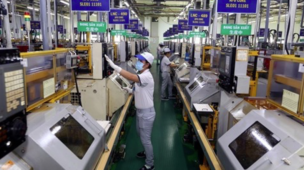
Tevin Tafese: What we find is that in these districts where Special Economic Zones have been established, there’s a shift from informal types of employment, especially in agriculture, to formal types of employment, especially in manufacturing and in foreign firms. And these jobs are not only better paid but they also offer more stable employment and participation in social security, for example.
So Special Economic Zones are a no-brainer?
Tevin Tafese: As economists we have to be humble. Just because it works in some context does not necessarily mean that it will work in in all the contexts. Vietnam is also a case where complimentary policies had been in place such as a conducive business environment and trade and investment liberalisation as well as a strong educational system that were key factors in enabling this the success of Special Economic Zones in the country.
In Vietnam, SEZs worked but the conditions were favorable. Let’s look elsewhere to get more evidence.
Enter our next expert. This time the study looks at Indonesia.
Alex Rothenberg: We study Indonesia’s integrated development zones, which is locally known as the KAPET programme. And this programme provided special tax treatment for firms who located in certain districts of Indonesia’s outer islands. So Indonesia is an archipelago, it’s you know thousands of islands. Most of economic activity in Indonesia is concentrated on Java. This programme was launched under Suharto in the late 1990s and we’re trying to just understand if it was successful. But this is really hard because you know we don’t know what would have happened if the programme hadn’t taken place. We really need a counterfactual to better understand you know what the particular districts that were targeted by the policy how they would have evolved if the policy just hadn’t occurred. In order to kind of come up with that counterfactual, we basically look at other districts that are as similar as possible to the districts that were treated and we use some data to kind of rebalance those districts on different dimensions. And we sort of study the changes in district outcomes over time.
And what do they find?
Alex Rothenberg: When we look at the effects of the programme on a variety of different measures, things like average wages in a district, employment rates, population growth, migration, and you know, consumption expenditures, poverty, we really find no difference in those outcomes and the changes of those outcomes between the districts that were affected by the programme compared to the districts that weren’t.
So, a dose of reality from Indonesia.
Alex Rothenberg: We find that the programme was not successful and we find that it really didn’t lead to any growth and welfare effects nationwide.
Why didn’t it work?
Alex Rothenberg: Tax incentives alone may not be very effective particularly when you’re targeting areas that have low market access and poor infrastructure. The other big you know kind of takeaway from our research is that you know had the the programme been you know tweaked and modified in different directions that you could have seen substantial growth and development effects from a modified policy. So I think you know policymakers you know need to think very carefully about how they design these SEZs to maximise growth and and development outcomes.
In other words, SEZs aren’t a silver bullet. While they have been dramatically successful in certain locations, without the right economic environment, connectivity, skilled labor, and demand, Special Economic Zones aren’t that special.
You’ve been watching Economics Unpacked. If you enjoyed this episode, please like, share, follow, and subscribe.
Fonte/Foto: VoxDev




Os comentários foram encerrados, mas trackbacks e pingbacks estão abertos.