
Tempo de leitura: 6 minutos
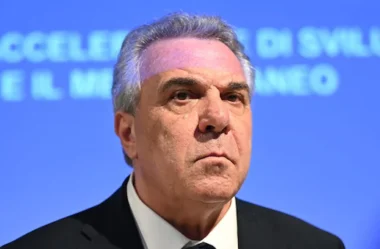
The South is still riding high thanks to the NRRP. But from 2027, for the first time in five years, growth could be lower than that of the Centre-North, and this issue risks becoming a wild card in the final phase of the Meloni government. According to Luigi Sbarra, Under-Secretary to the Prime Minister with responsibility for the South, the conditions are in place to ensure that the current recovery is not squandered.
Is the government drawing up a strategy for the post-PNRR period?
In recent years, Southern Italy has not merely been riding the tailwind of the NRRP. The measures introduced by the Meloni government have also contributed to this growth: business incentives, employment tax relief, infrastructure investment and labour tax cuts. This is a multi-pronged strategy that we will continue to pursue in the coming months, with the aim of consolidating growth that can continue even beyond the NRRP. We are, of course, awaiting the results.
With the new Department for the South, plans are in place to draw up a Strategic Plan for Southern Italy, as well as to update the Single SEZ Plan. What stage are you at, and what will these documents contain?
The Strategic Plan will serve as the framework for coordinating all policies relating to Southern Italy. We have already mapped out the measures intended for the South to make them more integrated and effective. As for the SEZ Plan, the one currently in force will expire next year. I believe one point to consider is the inclusion of renewable energy within the production sectors.
Growth in Southern Italy has been driven mainly by the construction sector, as a result of public investment under the ‘superbonus’ scheme initially and the National Recovery and Resilience Plan (PNRR) subsequently, and by the services sector, thanks to tourism. According to Svimez, in 2027 total investment will grow by just 0.7 per cent, compared with 1.7 per cent in the Centre-North. Household consumption is forecast to rise by 0.6 per cent (compared with 0.9 per cent). Do you envisage any targeted measures or incentives to reverse this trend?The Single Special Economic Zone (ZES Unica) will continue to be the main instrument for the development of Southern Italy in the coming years, and to this end I believe it would be appropriate to consider refinancing it through the next Budget Law, which should, at the very least, replicate the structure of the last budget: this means at least an additional 4 billion euros over the three-year period. The ZES works because it integrates complementary measures: a single authorisation to reduce bureaucracy, a tax credit to attract investment, social security contribution relief to boost employment, and a dedicated ceiling of 300 million euros for infrastructure development. According to Ambrosetti’s estimates, from 2024 it will generate an economic impact of around 60 billion euros and create nearly 70,000 jobs, contributing to the approximately 500,000 new jobs created during the Meloni government.
Employment is rising, but wages remain low, particularly in the South, and households’ purchasing power continues to suffer.
On the issue of wage policy, the government has already moved from discussion to action. I am thinking of the financial support to facilitate contract renewals in the private sector, the signing of all national collective labour agreements (CCNLs) in the public sector ahead of schedule, and the Labour Decree, which allocates one billion euros for social security contribution relief, with a particular focus on Southern Italy, through enhanced and exclusively dedicated incentives. With the ‘fair wage’ scheme, for the first time, businesses will only be eligible for these contributions if they comply with the total remuneration package set out in collective bargaining agreements.
You and the Prime Minister have proposed extending the Special Economic Zone (SEZ) nationwide. In what form and within what timeframe might this be realised?
The success of the Single Special Economic Zone (ZES Unica) has made it a benchmark strategy for the whole country, to the extent that President Meloni has indicated the possibility of extending the model with regard to the simplification of authorisation procedures. As for the timeframe, this is a proposal the government is currently working on. There is a highly complex issue of governance, between central and regional levels, which requires careful assessment.
The Ministry of Enterprise is considering extending the Special Logistics Zones in Central and Northern Italy to include non-port areas as well. Is this an alternative initiative to the one proposed by Palazzo Chigi?
Encouraging investment through the streamlining of red tape is an objective shared by the whole government. It is therefore natural that different approaches are being assessed to achieve the same result. It will then be necessary to harmonise the various initiatives within a coherent framework.
Does extending simplified procedures risk reducing the South’s competitive advantage? Often, the choice of where to locate investments – particularly by foreign multinationals – is linked precisely to the lack of red tape, rather than to incentives.
Reducing red tape is a national priority, not least in light of the recommendations received from the European Union. The government will continue to provide the South with advantages such as tax credits for productive investments, increased social security contribution relief, incentives for self-employment and the dedicated allocation of cohesion policy resources. We have also focused on providing infrastructure support to industrial consortia and local authorities with more than 5,000 inhabitants that have plans for industrial estates, and the response has been significant: applications totalling 750 million against an available budget of 300 million. We will now work to increase the funding allocation.
The cases of Tavolara and Ostuni have highlighted the issue of the balance of powers between central government and local authorities. Does the nationwide extension of the Special Economic Zone (SEZ) risk creating a form of generalised administrative intervention? There is no overlap of powers: in the two cases mentioned, it was the local authorities that took a step back. Any potential extension of the authorisation mechanism will take full account of all regulatory constraints, starting with the Constitution. The aim of the single authorisation has always been to guarantee a single point of access to procedures, whilst fully respecting the prerogatives of all the competent authorities.
What impact might the crisis at the former Ilva site in Taranto have on Southern Italy?The whole government is currently working to find a solution as quickly as possible. This includes a decisive contribution from the Special Economic Zone (ZES) to revitalise the Taranto area through investments that complement those in the steel sector. Since 2024, there have been 48 single authorisations in Taranto relating to investments totalling 450 million. And, given the emergency and the extraordinary plan put forward by the government, we will consider the importance of further accelerating the process for the new projects that are to be submitted.
Fonte: Il Sole 24 Ore | Foto: Reprodução




Os comentários foram encerrados, mas trackbacks e pingbacks estão abertos.